Why 2D Drawings Still Matter in a 3D World
Even with detailed 3D CAD models available, 2D technical drawings remain a standard deliverable in manufacturing — not because 3D modeling is insufficient, but because a drawing communicates something a 3D model alone does not: precisely which dimensions matter, what tolerance applies to each, and what needs to be verified during inspection.
What Goes Into a Complete Drawing
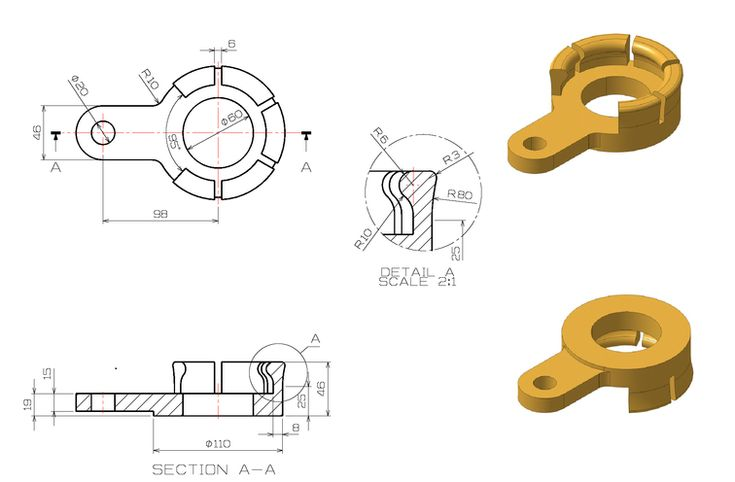
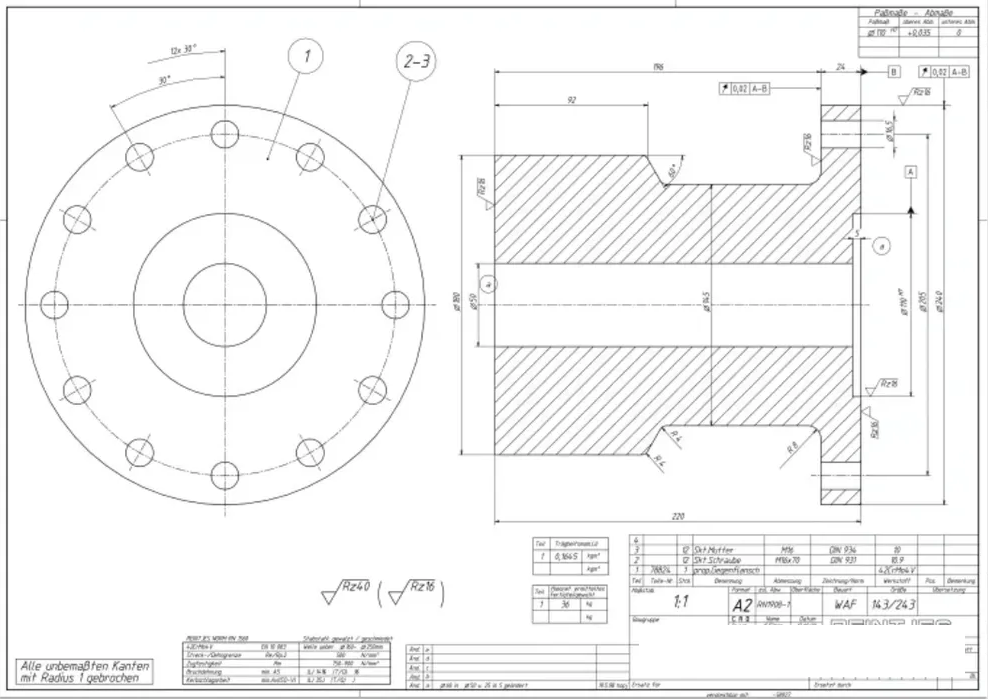
A fully dimensioned drawing specifies critical dimensions with their tolerances, surface finish requirements where they matter, material and heat treatment callouts, and any special notes about features like threads, welds, or coatings — everything a machinist or quality inspector needs without having to guess or reference a separate document.
Drawings as a Communication Tool
Technical drawings also serve as a shared reference point between everyone involved in a project — the designer, the machine shop, and quality control can all point to the exact same dimension and tolerance rather than interpreting a 3D model differently. This becomes especially valuable heading into small-batch or production runs, where consistent inspection against a clear standard is what keeps every part interchangeable.
Drawings Support Quality Control Directly
Beyond guiding manufacturing, a well-prepared drawing directly supports quality control by defining exactly what an inspector should measure and what range of values counts as acceptable — turning subjective judgment calls into clear, objective pass/fail criteria.
Need Production-Ready Drawings for Your Part?
RunTechEngineer prepares fully dimensioned technical drawings that give manufacturing and quality control exactly the information they need, alongside the 3D CAD model.
A finished drawing is the natural end point of the design process, ready for CNC machining or 3D printing — or Contact Us to discuss your part.