
When Tooling Doesn’t Make Sense
Processes like injection molding become extremely cost-effective at high volume, but only after a significant upfront investment in tooling — a cost that simply is not justified for a run of a few dozen or a few hundred parts. 3D printing fills exactly this gap, avoiding tooling costs entirely at the expense of a somewhat higher per-part cost.
How Small-Batch Printing Actually Works
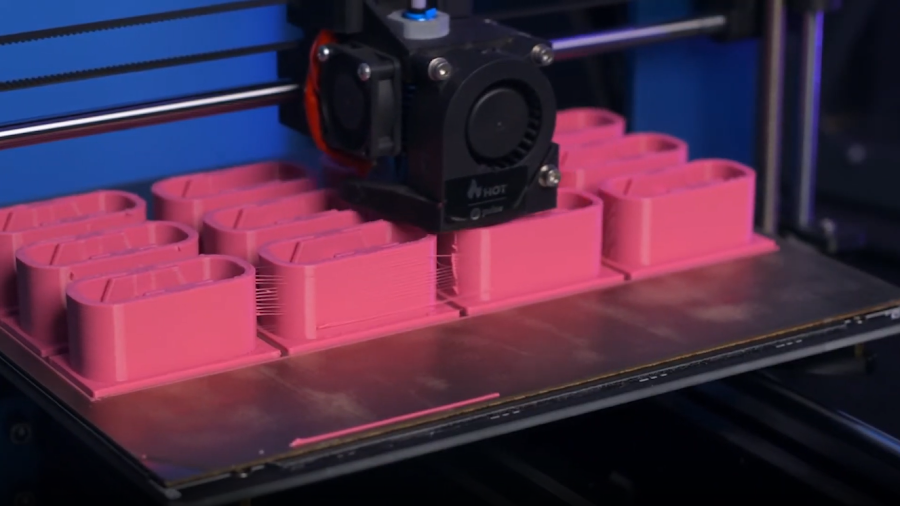
Running multiple printers in parallel, or printing several parts per build plate on a single machine, allows a batch of parts to be produced in a reasonable timeframe without any of the setup associated with traditional manufacturing tooling. A design that has already been through a proper design-for-3D-printing review prints more reliably across an entire batch, reducing the failed prints that would otherwise eat into both time and material.
Where the Cost Crossover Point Sits
The decision between 3D printing and tooling-based manufacturing usually comes down to volume: at low quantities, 3D printing’s lack of upfront tooling cost wins clearly; at higher volumes, the lower per-part cost of injection molding or other tooled processes eventually overtakes it. Understanding roughly where that crossover sits for a specific part helps avoid over-investing in tooling too early or under-investing in it too late.
Consistency Across a Batch
Even without tooling, small-batch 3D printing still requires attention to consistency — using the same material batch, consistent printer calibration, and periodic quality checks across the run, the same fundamentals that apply to any small-batch manufacturing process regardless of the technology behind it.
Have a Low-Volume Run That Doesn’t Justify Tooling?
RunTechEngineer runs cost-effective small-batch 3D printing production for projects where traditional tooling isn’t yet justified, without sacrificing consistency across the run.
For parts needing tighter tolerances at volume, it’s worth comparing against CNC small-batch production as well — or Contact Us to discuss your production volume.
Pingback: Functional 3D Printed Parts: Durable Prints for Real Use