
What a Tolerance Actually Promises
A dimensional tolerance defines how much a machined feature is allowed to deviate from its ideal size — a hole meant to be exactly 10mm might realistically be specified as 10mm plus or minus 0.02mm. That small allowance is not a shortcut; it is an honest acknowledgment that no machining process is perfectly exact, paired with a guarantee about exactly how imperfect it is permitted to be.
Why Tighter Isn’t Always Better
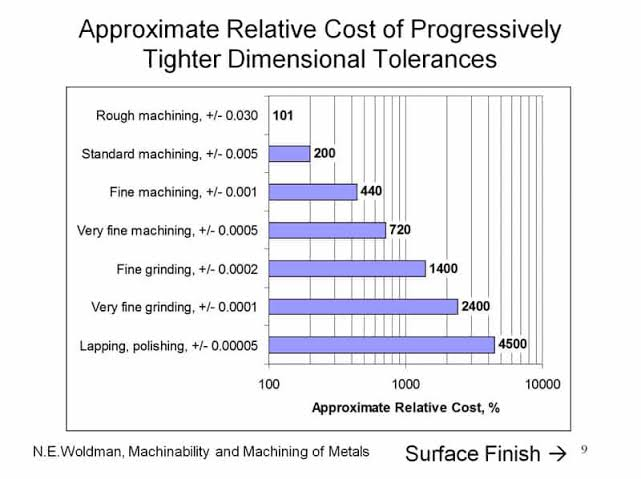
It is tempting to specify the tightest tolerance possible on every dimension, but tighter tolerances come at a real cost — slower machining speeds, more frequent tool changes, additional inspection time, and in some cases entirely different equipment. The better approach reserves tight tolerances for the dimensions that genuinely need them, such as a bearing bore or a mating surface, while leaving more generous tolerances on features where a small variation has no practical impact.
Factors That Affect Achievable Tolerance
Several variables determine how tight a tolerance a shop can realistically hold: the rigidity of the machine and tooling, the material being cut (harder materials often machine more predictably than soft or gummy ones), thermal effects during long cuts, and the accuracy of the measuring equipment used to verify the result. A well-tuned Mach3 CNC controller setup also plays a role, since inconsistent motion control can undermine even the best tooling and technique.
Verifying the Result
Specifying a tolerance is only half the process — confirming a part actually meets it requires proper measurement, using tools like calipers, micrometers, or coordinate measuring machines depending on how tight the tolerance is and how critical the feature is to the part’s function.
Need Parts Machined to Tight Tolerances?
RunTechEngineer applies precision tolerancing where it genuinely matters, balancing dimensional accuracy against cost so every part meets its functional requirements without unnecessary expense.
Precision like this depends on solid finishing work too — see our guide to CNC finishing services, or Contact Us to discuss your tolerance requirements.

Pingback: 3D Printing Tolerances: Clearances & Wall Thickness Guide