Article
The Short Answer
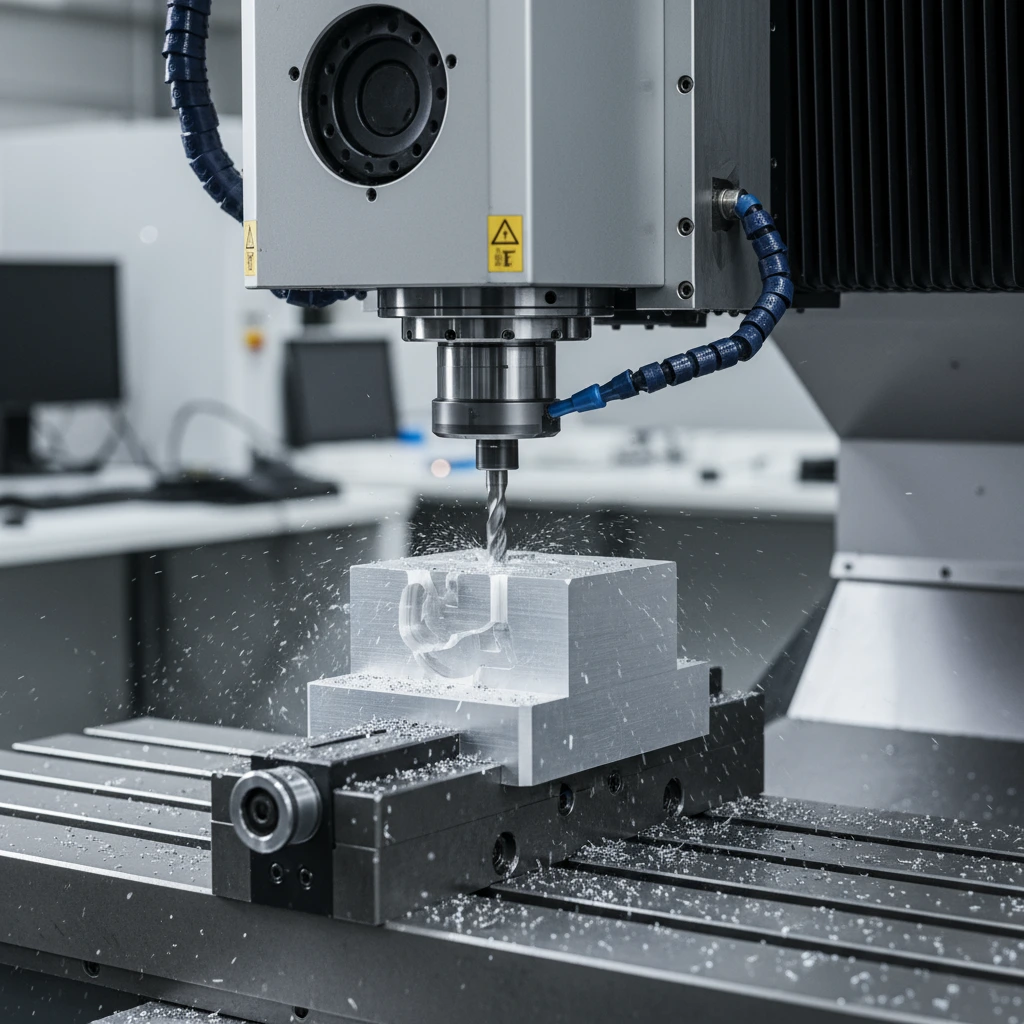
Milling and turning are the two main processes in CNC machining, and they differ in what rotates. In milling, a rotating cutting tool moves across a workpiece that is held still. In turning, the workpiece rotates while a stationary tool is fed into it.
That single difference determines the shapes each process produces well. Turning makes round parts. Milling makes almost everything else.
How CNC Milling Works
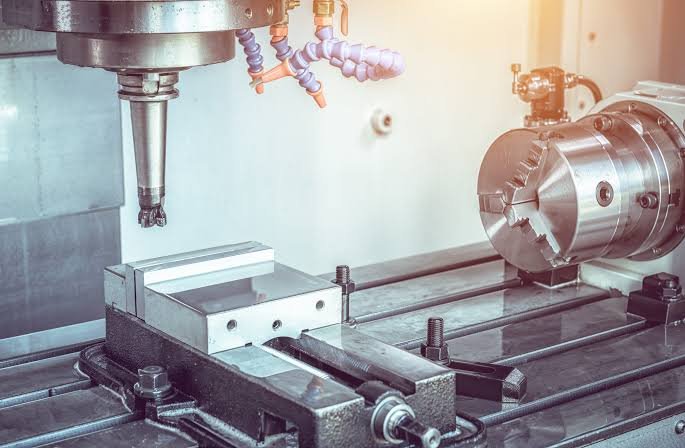
A milling machine clamps the workpiece to a table or in a vise. A spinning cutter, such as an end mill or a face mill, moves along the X, Y, and Z axes and removes material as it goes. Because the tool can approach from many directions, milling handles flat faces, pockets, slots, holes, and complex 3D surfaces.
Machines are described by their number of axes. A 3-axis mill covers most everyday work. 4-axis and 5-axis machines can tilt or rotate the part or the tool, which allows angled features and curved surfaces to be cut in fewer setups.
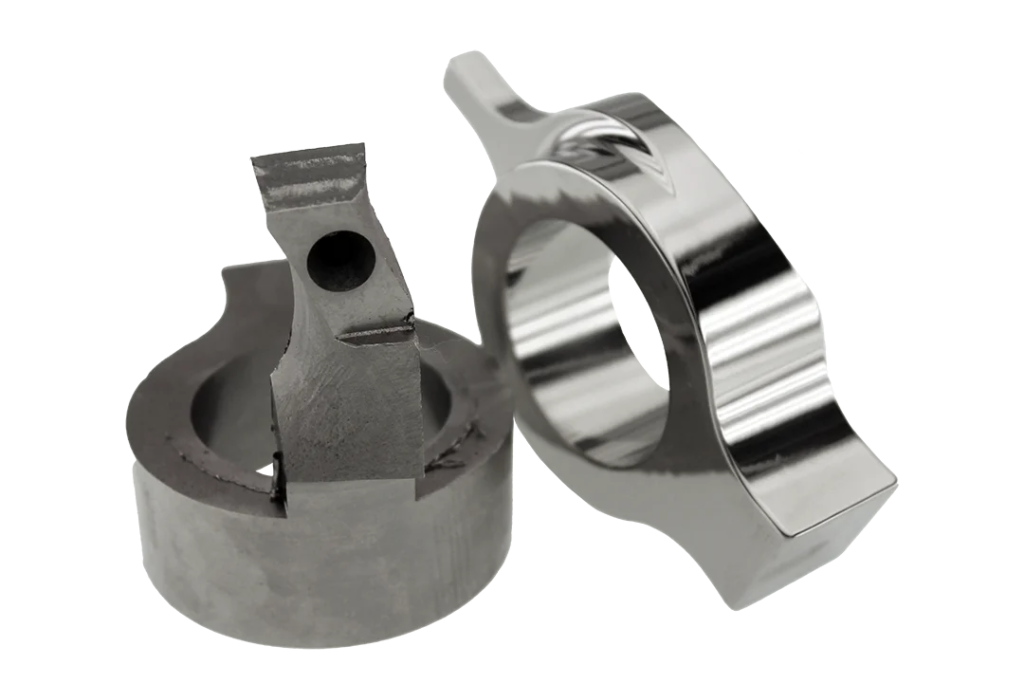
Typical milled parts include brackets, housings, mounting plates, moulds, and enclosures.
How CNC Turning Works
A CNC lathe grips the workpiece, usually a round bar, in a chuck and spins it at high speed. A cutting tool mounted on a turret moves along two axes: X toward or away from the centreline, and Z along the length of the part. As the material rotates past the tool, it is shaved down to an exact diameter.
Turning operations include facing, outside-diameter turning, boring, grooving, threading, and parting off.
Typical turned parts include shafts, pins, bushings, spacers, pulleys, and threaded fittings.
Side-by-Side Comparison
| CNC Milling | CNC Turning | |
|---|---|---|
| What rotates | The cutting tool | The workpiece |
| Best part shape | Prismatic: flat faces, pockets, slots | Cylindrical: round and symmetric about an axis |
| Usual stock | Blocks and plates | Round bar |
| Cutting tool | Multi-edge cutters such as end mills | Single-point inserts |
| Main axes | X, Y, Z, plus optional rotary axes | X and Z |
| Typical parts | Brackets, housings, moulds | Shafts, bushings, fittings |
| Cost for round parts | Higher | Lower |
Which Process Costs Less?
For round parts, turning is usually faster and cheaper. The cut is continuous, material comes off quickly, and bar-fed lathes can run long batches with little attention. Machining the same cylinder on a mill takes longer and gives a poorer surface on the round faces.
For parts with flat faces, pockets, or features on several sides, milling is the only practical choice. Cost in milling is driven mainly by the number of setups: every time the part has to be re-clamped in a new orientation, time and risk of error increase.
When a Part Needs Both
Many real parts are mostly round but include a few non-round features, such as a shaft with a keyway, a fitting with wrench flats, or a flange with a bolt circle. There are two ways to make them.
The first is to turn the part on a lathe and then move it to a mill for the remaining features. The second is to use a mill-turn machine, a lathe with powered (“live”) tooling that can mill and drill while the part is still in the chuck. Mill-turn machines finish the part in one setup, which improves accuracy between features and shortens lead time.
How to Choose
- Look at the overall shape. If the part is symmetric around a central axis, start with turning.
- List the features that are not round. A few flats or cross holes suggest turning plus a secondary milling step, or mill-turn.
- Consider the stock. Round bar points to turning, plate or block points to milling.
- Consider quantity. High volumes of small round parts strongly favour turning.
- Check the tightest tolerances. Concentric diameters are easiest to hold on a lathe; positional tolerances between faces and holes are easiest on a mill.
Design Tips That Reduce Cost
- Keep round parts fully round where possible, so they can be finished on a lathe alone.
- On milled parts, add internal corner radii. A square internal corner cannot be cut with a round tool.
- Avoid very deep, narrow pockets, which need long tools that deflect and chatter.
- Design features to be reachable from as few sides as possible.
- Apply tight tolerances only where the function requires them.
Not Sure Which Process Your Part Needs?
RunTechEngineer reviews your design, recommends the most economical machining process, and prepares it for manufacturing.
New to the topic? Start with What Is a CNC Machine and How Does It Work?, or Contact Us to discuss your part.