
Why Heat Deserves Its Own Analysis
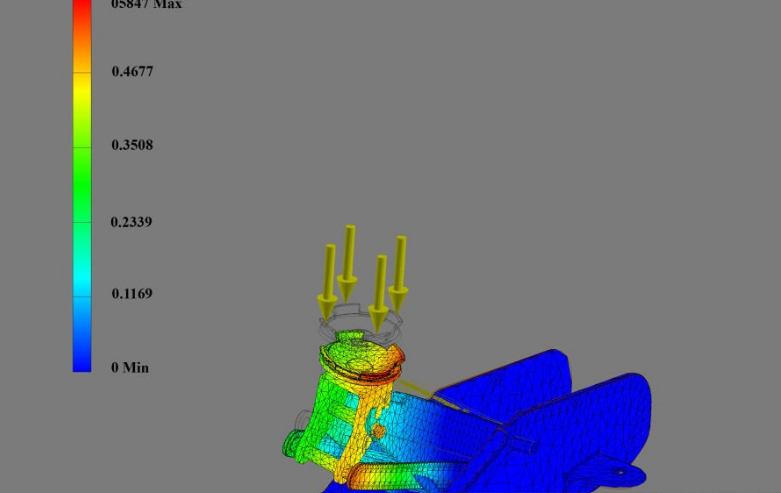
A design validated only for mechanical loads through FEA can still fail once heat enters the picture. Materials expand as they warm, lose strength at elevated temperatures, and can develop internal stress simply from uneven heating — none of which shows up in a purely structural analysis.
What Thermal Simulation Predicts
Thermal simulation models how heat generated by a motor, an electronic component, or friction actually spreads through an assembly over time, identifying hot spots, predicting steady-state operating temperatures, and showing how quickly (or slowly) heat dissipates through the surrounding structure or cooling system.
Thermal Expansion Is Often the Real Problem
Beyond simple overheating, uneven thermal expansion can be just as damaging — two parts made from different materials expanding at different rates can bind, crack, or lose the precise fit they were designed with, particularly in assemblies that need to maintain tight tolerances across a range of operating temperatures.
Designing With Heat in Mind From the Start
Catching thermal issues in simulation allows for design changes that are simple on paper — adding a heat sink, choosing a different material, adjusting a clearance to account for expansion — rather than expensive fixes after a physical prototype has already shown a heat-related failure.
Worried About How Heat Will Affect Your Design?
RunTechEngineer runs thermal simulation alongside structural analysis to catch heat-related issues before they become physical failures, keeping designs reliable across their real operating temperature range.
Heat also affects how parts move — see our guide to motion and kinematic simulation, or Contact Us to discuss your design.
Pingback: FEA vs CFD: What's the Difference? | RunTechEngineer
Pingback: FEA Services: Stress Analysis for Parts and Assemblies