
Why Early Designs Are Rarely Optimal
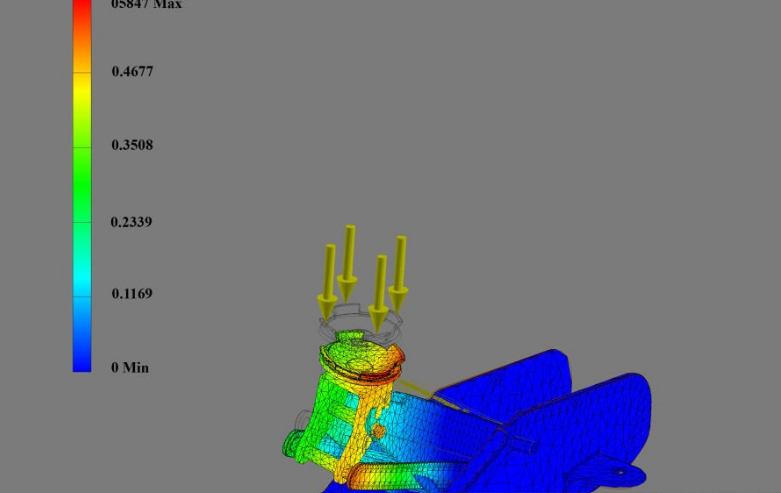
A first-pass design is usually built with generous safety margins, simply because there isn’t yet enough data to know exactly where material is needed and where it isn’t. Once FEA results are available, that uncertainty disappears, and it becomes clear that large portions of many designs are carrying far more material than the actual loads require.
How Optimization Uses Simulation Data
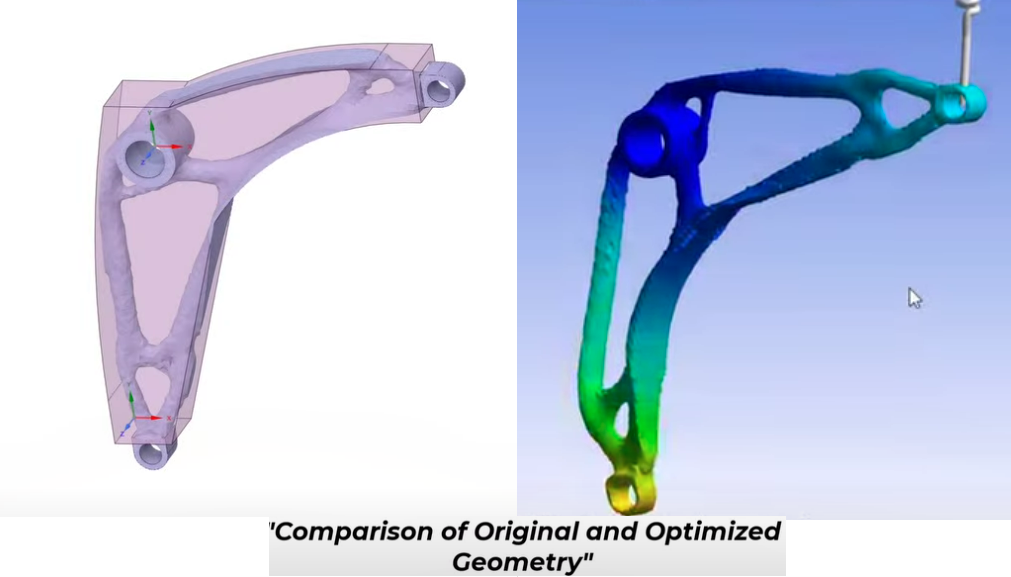
Design optimization takes stress and deformation results directly from simulation and uses them to guide changes — removing material from consistently low-stress regions, adding it only where analysis shows genuine risk, and reshaping load paths to distribute stress more evenly across a part.
Topology Optimization and Generative Design
More advanced optimization methods, like topology optimization, let software explore thousands of possible material distributions automatically, often arriving at organic, load-following shapes that a human designer would be unlikely to sketch by hand — shapes frequently well suited to 3D printing given their complex geometry.
Balancing Weight, Cost, and Manufacturability
Optimization is not just about minimizing weight for its own sake. A lighter design often reduces material cost and, in applications like drones or vehicles, directly improves performance — but the resulting shape still needs to remain practical to manufacture, whether by machining, casting, or printing.
Ready to Trim Weight Without Losing Strength?
RunTechEngineer uses simulation-driven design optimization to reduce weight and material cost while keeping designs just as strong where it actually matters.
Every optimized design still needs to be verified against its real service life — see our guide to failure and fatigue analysis, or Contact Us to discuss your project.

Pingback: FEA Services: Stress Analysis for Parts and Assemblies
Pingback: Fatigue Analysis: Methods, Steps & Fatigue Life Prediction